Why Peak Season Is Relevant for an EBC Helicopter Tour
The Everest Base Camp Helicopter Tour is one of the most exciting ways to experience the Himalayas in a short amount of time. Instead of spending days trekking, travelers can fly directly from Kathmandu, enjoying breathtaking views of towering peaks, deep valleys, glaciers, and remote villages that are accessible only on foot. This adventure includes flying over renowned mountains such as Mt. Everest, Lhotse, Nuptse, and Ama Dablam; landing in high-altitude areas like Kala Patthar or Everest Base Camp; and making a stop at Hotel Everest.
Unfortunately, this experience is highly dependent on weather conditions, making timing a crucial factor for success. It is essential to choose the right season for EBC Helicopter Tours, considering safety, comfort, and visibility. Simply hoping for favorable weather in the Himalayas does not guarantee it. Poor weather can lead to disappointments, including delayed flight schedules, obstructed views, or even cancellations. When planning for any season, it’s vital to track the best weather during these prime times.
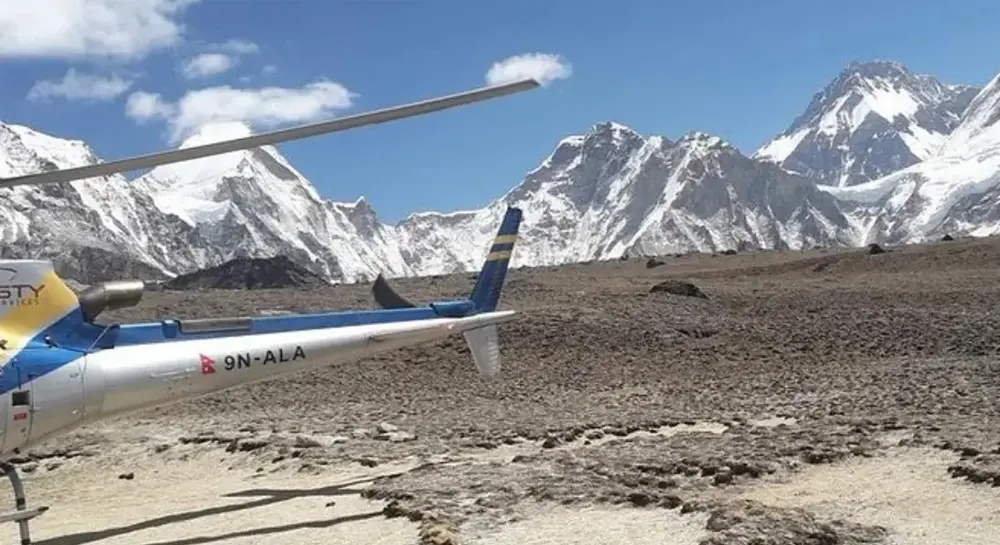
During peak seasons, you can expect clear skies, light winds, and consistent temperatures, which allow helicopters to operate smoothly and land on some of the highest peaks where few can land. The peak season is an opportunity for ideal sightseeing, offering numerous photo opportunities and a streamlined itinerary. So, why not make the most of it? The peak seasons for the Everest Base Camp Helicopter Tour in Nepal are Spring (March to May) and Autumn (September to November).
Spring offers a mix of pleasant weather, hills covered with lovely rhododendrons, and breathtaking views of the mountains capped with snow, whereas autumn has the mountains’ admiration with the best view and clear skies. These seasons are characterized by incredible flying conditions, which are reasons why the EBC Helicopter Tour is the most favored time. Major activities in the peak months include daily operations full of energy, superb views of the Everest area, and unforgettable experiences in the Himalayas.
Which season is considered the peak of the EBC helicopter tour?
Spring (March-May) and Autumn (September-November) are the peak seasons for an Everest Base Camp (EBC) helicopter tour, with April and October often being the crowded months due to clear skies, stable weather, excellent visibility for stunning views of Everest, and the blooming rhododendrons in spring. This combination of ideal conditions means higher demand and more flights, but also higher prices and more crowds. The result means that travelers experience a smoother flight, safer landings, and continuous sight of Mount Everest and other peaks surrounding it.
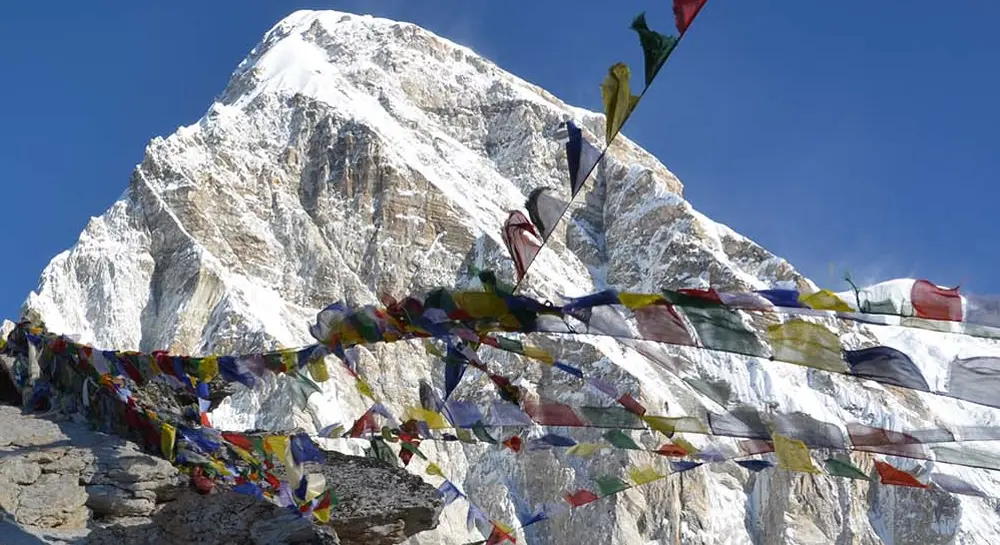
Spring (March to May) is credited as one of the most beautiful times to experience the EBC Helicopter Tour. Once the cold winter is behind us, the Himalayas come alive with bright rhododendron forests, fresh snow on the high peaks, and comfortable temperatures. The skies are usually clear, offering excellent flying conditions and outstanding aerial views of Everest, Lhotse, and Ama Dablam. Furthermore, this month is also the mountaineering season for mountain enthusiasts, contributing an extra boost through excitement and action to the region, raising more interest in high-end helicopter tours.
Autumn (September–November) is known for its crystal-clear mountain visibility, making it a favorite season for photographers and first-time visitors. After the monsoon rains clear the atmosphere, the air becomes sharp and clean, allowing travelers to see the long Himalayan ranges with exceptional clarity. These outstanding weather conditions, combined with high flight reliability and lower chances of cancellation, are the main reasons why spring and autumn dominate EBC helicopter bookings. Travelers prefer these months because they offer the best balance of safety, scenery, and overall experience during the peak season EBC Helicopter Tour.
Peak Season Weather Conditions
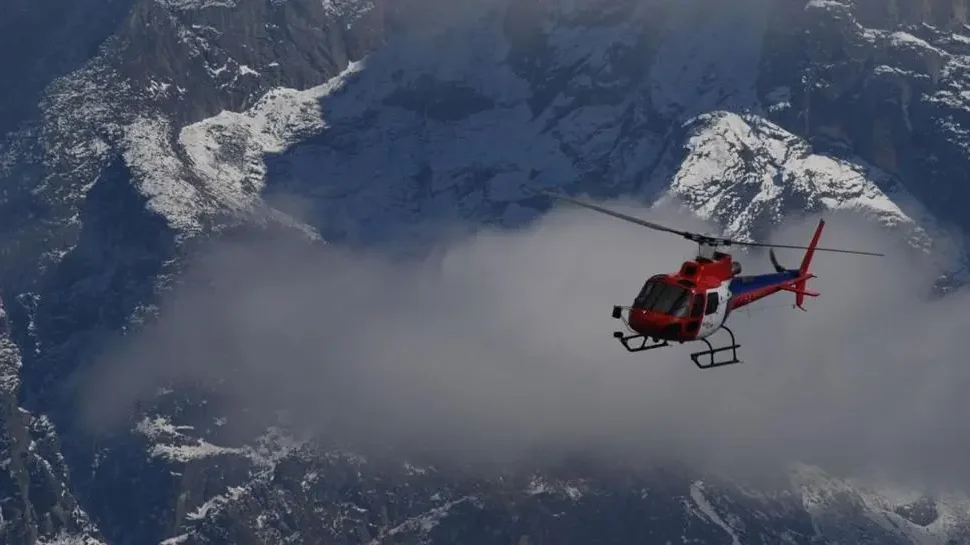
During the peak season of EBC Helicopter Tour, weather conditions are at their most favorable, making these months ideal for flying in the high Himalayas. The atmosphere is characterized by stability during the spring (March–May) and autumn (September–November) periods, featuring soft wind patterns and minimal turbulence. The risks associated with wind are at their lowest during these periods, which have a direct impact on the safety of helicopter operations at high altitudes. They are smoother takeoffs, landing safely, and have more reliable flight schedules. The weather’s quality must be a factor in the fewer delays and cancellations, which boosts travelers’ trust in their plans.
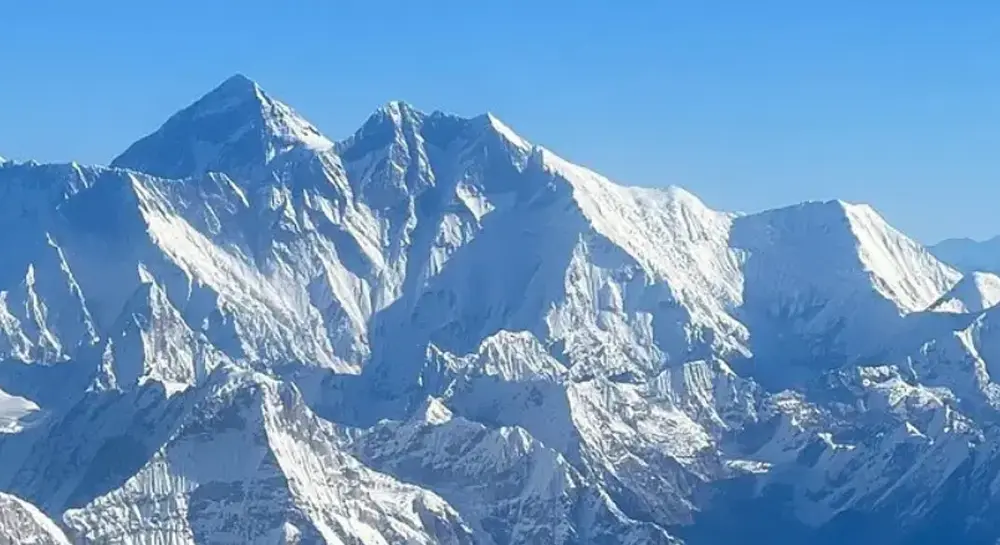
The clearness of the skies and the excellence of the visibility are one of the peak season’s biggest benefits. The cloud cover is very light during these months, thus giving the visitors uninterrupted views of Mount Everest, Lhotse, Nuptse, and Ama Dablam, as well as Khumbu Glacier. The pilot’s visibility is also increased, ensuring safe navigation through the Himalayan valleys. The photography lovers will be at their best in peak season because it offers the sharpest light and most dramatic mountain landscapes, which means every moment spent in the air will be cherished.
The other main reason why the weather is a benefit during peak season is the temperature balance that prevails at the heights. In winter, the extreme cold can delay landings, while summer brings the monsoon season, which introduces discomfort due to high moisture levels in the air. Spring and autumn turn out to be the best seasons with mild temperatures, even at Kala Patthar or Everest Base Camp. The average temperature allows the participants of the flight to get off the helicopter and comfortably take photos, walk short distances, and enjoy the view without being in harsh conditions. Thus, the peak season EBC Helicopter Tour guarantees not only safer flights but also a more enjoyable and comfortable high-altitude experience.
Mountain Visibility & Scenic Highlights
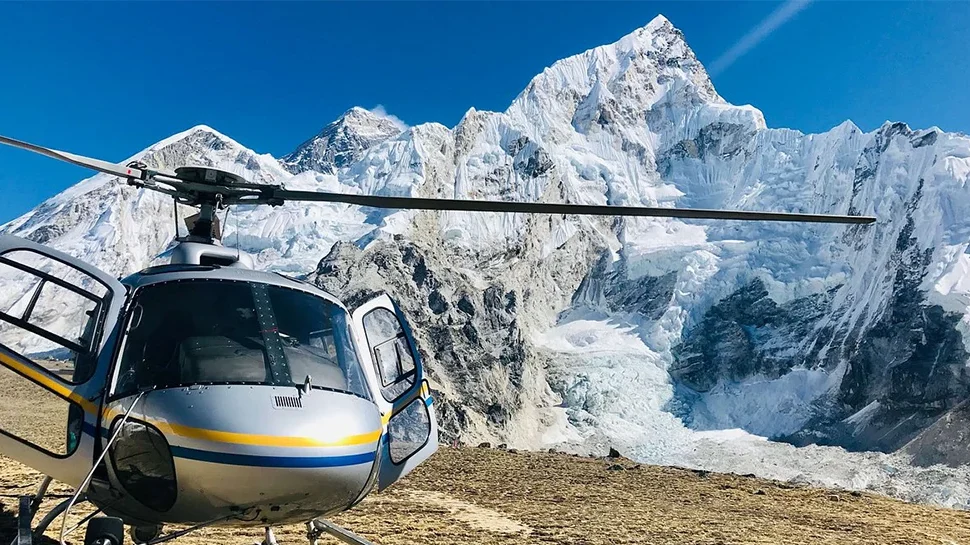
The major advantage of traveling to the EBC Helicopter Tour in the full season is the ultimate mountain visibility; the clear weather gives an untouched panoramic view of Mount Everest, Lhotse, Nuptse, and Ama Dablam, all visible from only one flight. From the initial time when the helicopter enters the Everest region, travelers can witness the vast Himalayan landscapes depicted with high valleys, glaciers, and spectacular ridgelines. These clear visibility lines provide the best opportunity to appreciate the scale and beauty of the world’s highest mountains, as there is no other time when this atmosphere is more breathtaking.
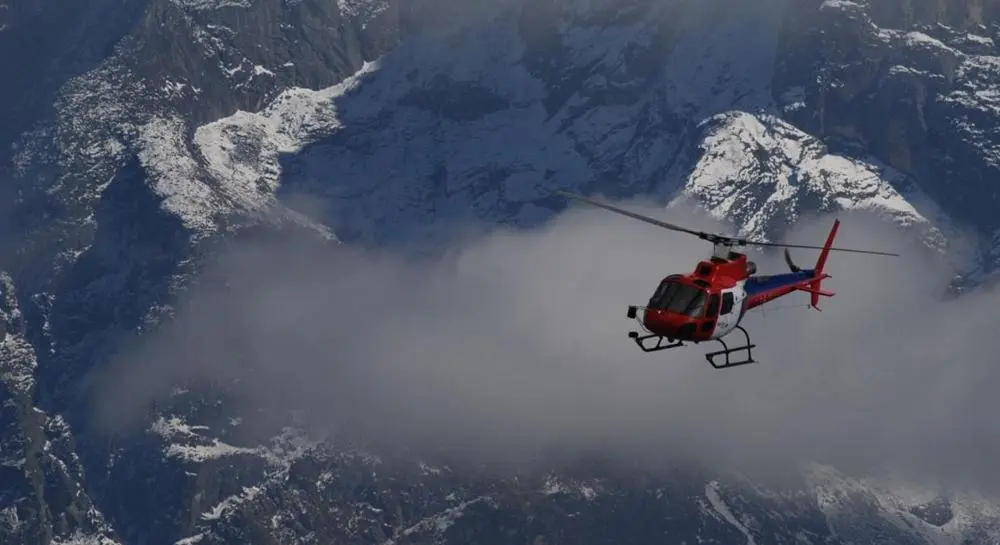
During peak season, the Himalayas look at their dramatic best and never fail to amaze visually. Furthermore, sunlight glancing off those sharp peaks defines them indelibly, outlining them with light. In the spring, the crisp, fresh snow stands out against a clear sky, and in the fall, the crisp, fresh, and abundant colors are accentuated by clear, post-monsoon skies. The ideal, picture-perfect landscape that this combination creates is simply incomparable. That creates a visibly unforgettable experience.
For a photographer or photography guide, the peak season offers some of the best conditions for aerial photography of the year, including firm dew, minimal or no mist, and bright, high-quality natural light, all of which are essential for capturing sharp-contrast aerial photographs during flights and landings. Everest seen from above, glaciers extending across the Khumbu region, and close-ups of Kala Patthar are all picturesque, but the lighting during peak seasons and the clarity of the weather render almost the same phenomenal shots. Ideal conditions like peak seasons are why this helicopter tour to the Everest Base Camp would make any tourist the best they could dream of in terms of capturing these extremely rare views of the Himalayas.
Landing Experience at Everest Base Camp / Kala Patthar
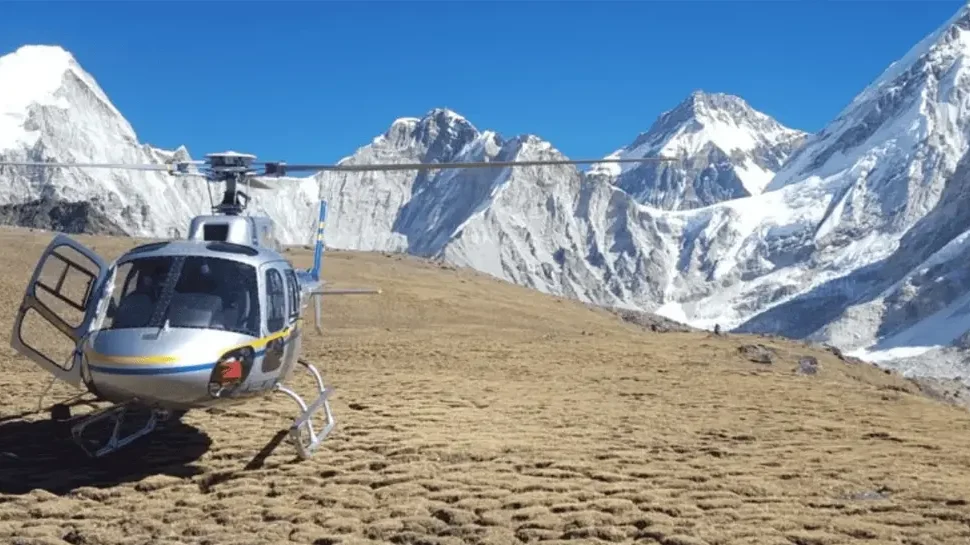
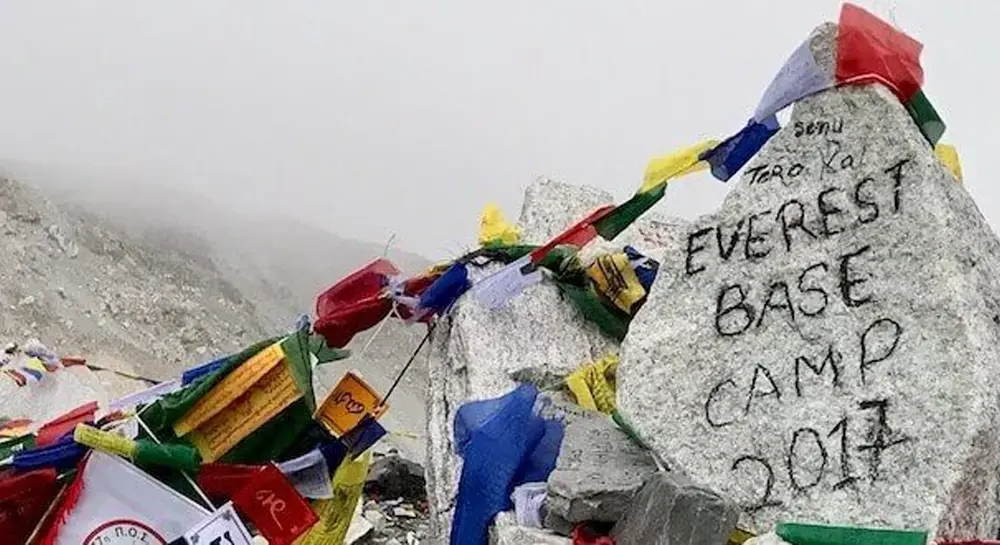
The peak season EBC Helicopter Tour offers a notable enhancement in the landing experience at Everest Base Camp or Kala Patthar, particularly in terms of safety and smoothness. During spring and autumn, pilots execute high-altitude landings with greater confidence due to the stable weather, low wind speeds, and clear skies. These conditions are not merely favorable; they are crucial in the Everest region, where the high altitude and rugged terrain demand precise timing and control. Consequently, passengers enjoy a more comfortable and secure landing compared to those flying during the off-season.
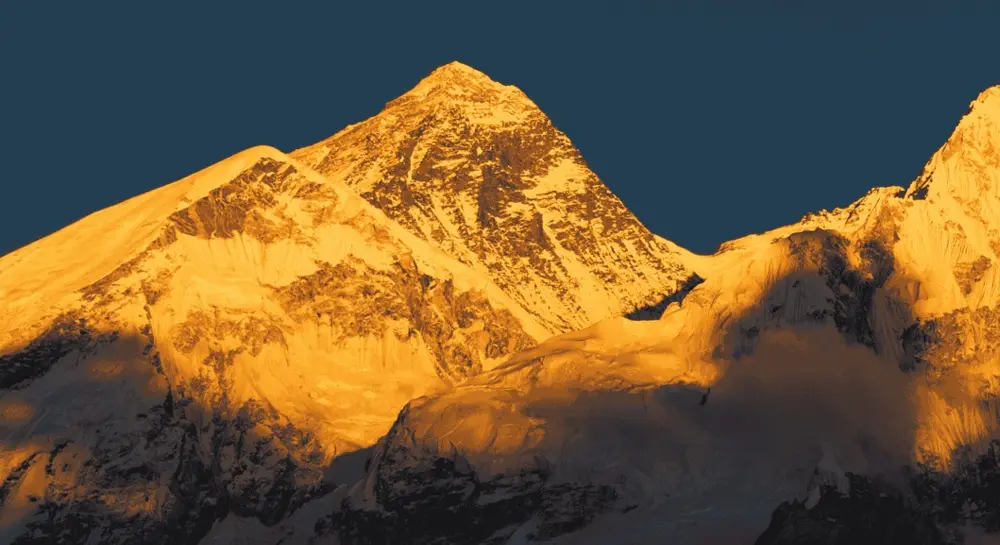
Visibility is another key factor that makes the peak season beneficial for pilots. The clear skies and minimal cloud cover offer pilots improved depth perception and a more profound understanding of the terrain, allowing them to see landing areas, slopes, and surface conditions. This enhanced visibility not only helps mitigate operational risks but also ensures that helicopters can land and take off punctually, even under challenging high-altitude conditions. For passengers, these advantages translate into smoother operations and a more relaxed mindset during the most exhilarating part of the Everest Base Camp Helicopter Tour.
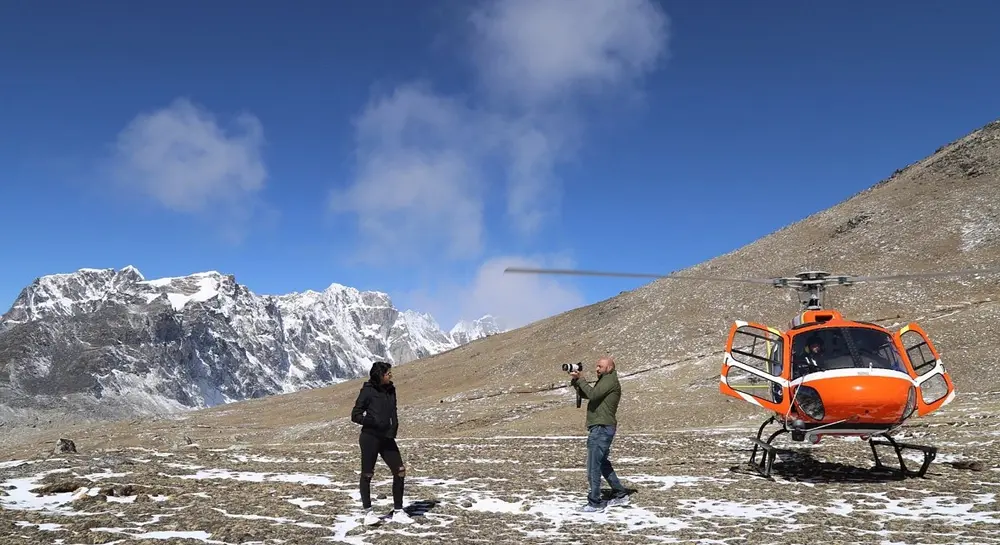
The peak season typically allows for more generous ground time for photos and exploration due to the more predictable weather conditions. Tourists can step outside, appreciate the breathtaking scenery of the Himalayas, and capture iconic images with Everest and the surrounding peaks as their backdrop. This season not only enables visitors at Kala Patthar to experience Everest up close but also allows for a brief exploration at Base Camp, thereby enhancing the overall quality of the experience. The additional time transforms the EBC Helicopter Tour from simply a flight into a genuine Himalayan adventure.
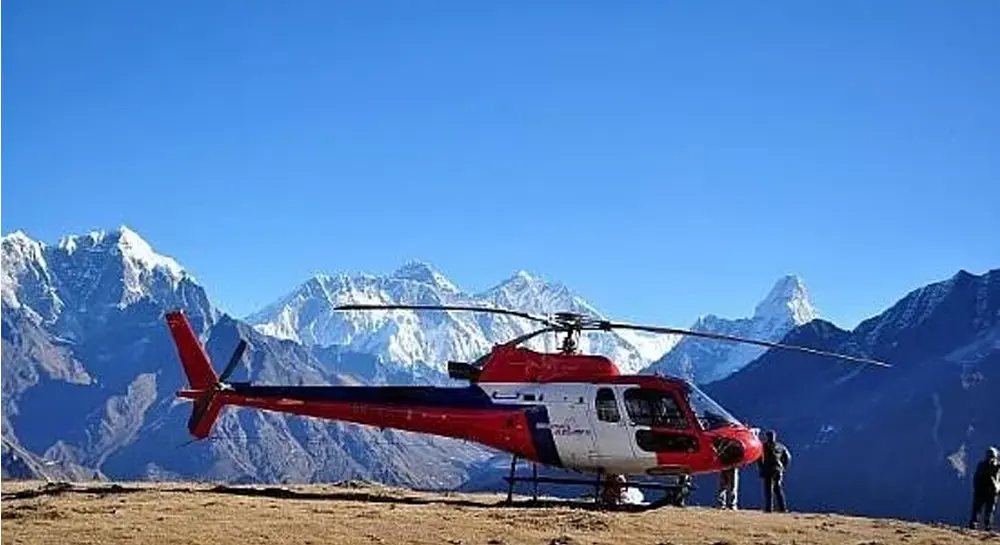
Peak Season Experience at Hotel Everest View
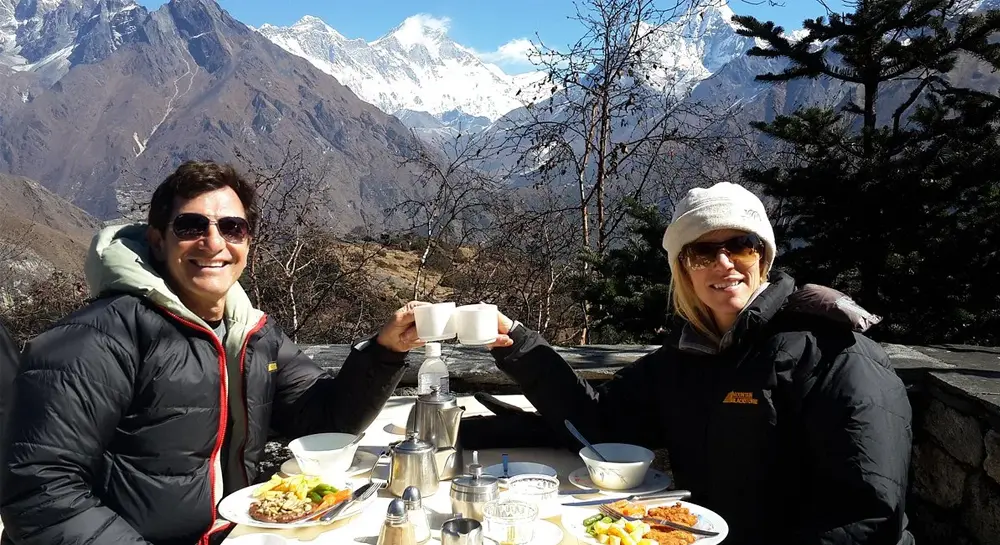
One of the top highlights of the peak season EBC Helicopter Tour is the unforgettable stop at the Hotel Everest View, also known as the world’s highest-altitude hotel. During the spring and autumn, when the weather is fine, the room faces directly towards Everest, providing an unobstructed panorama; the majestic peak is framed by large glass panes or visible from the terrace dining area, with crystal-clear skies and unobstructed views during the peak season. While enjoying breakfast, a guest would thus see Everest, Lhotse, or Ama Dablam right in front of them, and such an experience practically defines luxury travel in the Himalayas.
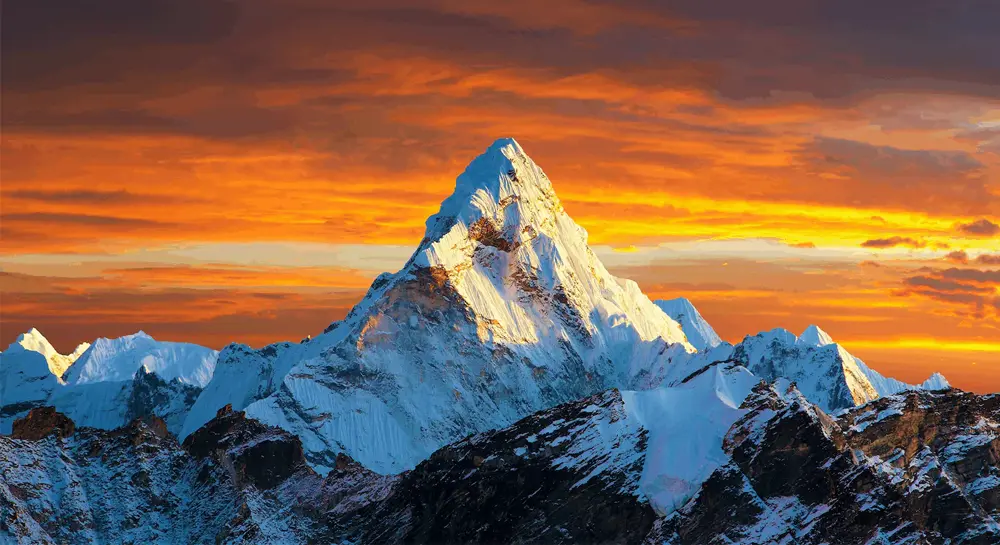
In short, during peak season, the Hotel Everest View offers a comfortable daytime temperature that is conducive to hiking. Contrary to the biting cold of winter or the unbearable humidity of monsoon, autumn and spring offer mild and stable weather throughout, offering an option to sit outside to soak up the mountain atmosphere, take photos, etc., without any discomfort. The moderate temperatures greatly enhance the experience for those who wish to spend time enjoying Himalayan views on the deck during their one-hour charter service trip to MVP with the Hermes helicopter.
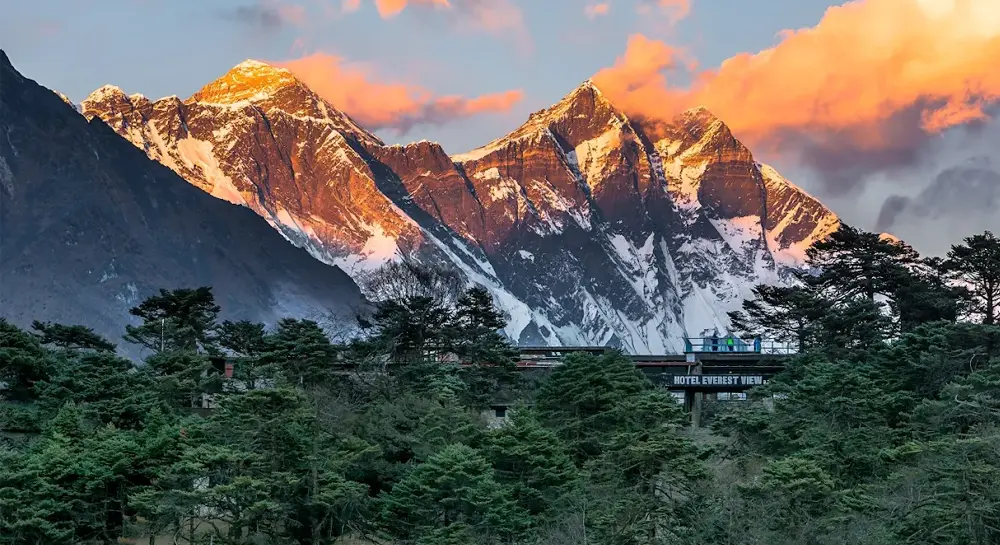
The hotel experience feels especially refined during the peak tourist months, when services operate at their highest standards. During this period, Hotel Everest View elevates its luxury feel with attentive hospitality and a lively yet elegant atmosphere. Combined with flawless weather, clear mountain visibility, and smooth helicopter operations, the peak season transforms this stop into one of the most memorable moments of the EBC Helicopter Tour, perfectly blending comfort, scenery, and exclusivity.
Crowd Factor: Is Peak Season Too Busy?
The Peak season in the Everest region naturally brings an increase in visitors, especially along popular trekking routes to Everest Base Camp. During spring and autumn, trails, teahouses, and viewpoints can feel crowded with trekkers and climbers. However, the experience is unique for those who choose the peak season EBC Helicopter Tour. Unlike trekking, which involves shared paths and overnight stops, helicopter tours operate independently of ground traffic, offering a far more streamlined and comfortable way to experience Everest.
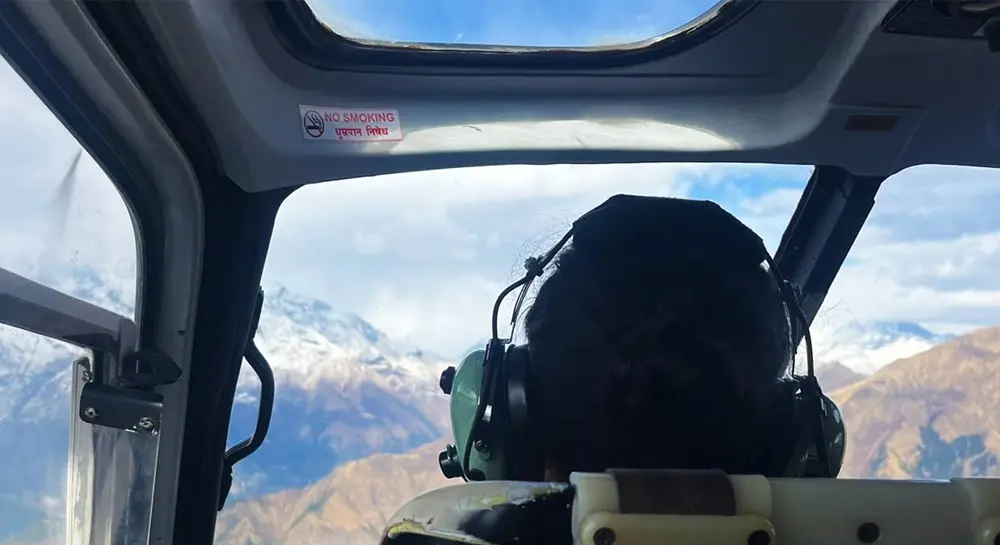
One of the biggest advantages of helicopter travel is how it avoids ground congestion entirely. Helicopters fly directly over busy trekking trails and land briefly at designated zones near Kala Patthar or Everest Base Camp, without the delays caused by foot traffic. Even during the busiest months, aerial routes remain open and efficient, allowing travelers to bypass crowded villages and viewpoints. This makes the Everest Base Camp Helicopter Tour an ideal choice for those who want to experience peak season conditions without dealing with trekking crowds.
Despite being the most popular time to visit, peak season still feels exclusive when experienced by air. Limited in number, carefully scheduled, and operated with strict safety controls, helicopter tours ensure a personalized and premium experience. With private or small-group flights, unobstructed mountain views, and minimal time spent in crowded areas, travelers enjoy the best of the season without the stress. This unique balance of popularity and privacy is why peak season remains the most preferred time for a luxury EBC Helicopter Tour.
Safety & Flight Reliability in Peak Season
Safety is a top priority in the Himalayas, and the peak season EBC Helicopter Tour offers the most reliable flying conditions of the year. During spring and autumn, stable weather patterns and clear skies significantly reduce the chances of delays and cancellations. Compared to monsoon or winter months, peak season flights operate with lower cancellation rates, allowing travelers to complete their itinerary as planned. This reliability is especially important for those with limited time in Nepal or fixed travel schedules.
Peak season also benefits from enhanced rescue and operational readiness across the Everest region. During high-demand months, helicopter services, air traffic coordination, and emergency response teams are fully active and well-prepared. This increased level of readiness ensures faster decision-making, better communication, and immediate support if weather- or altitude-related situations arise. For travelers, this means added peace of mind while flying at high altitude on an Everest Base Camp Helicopter Tour.
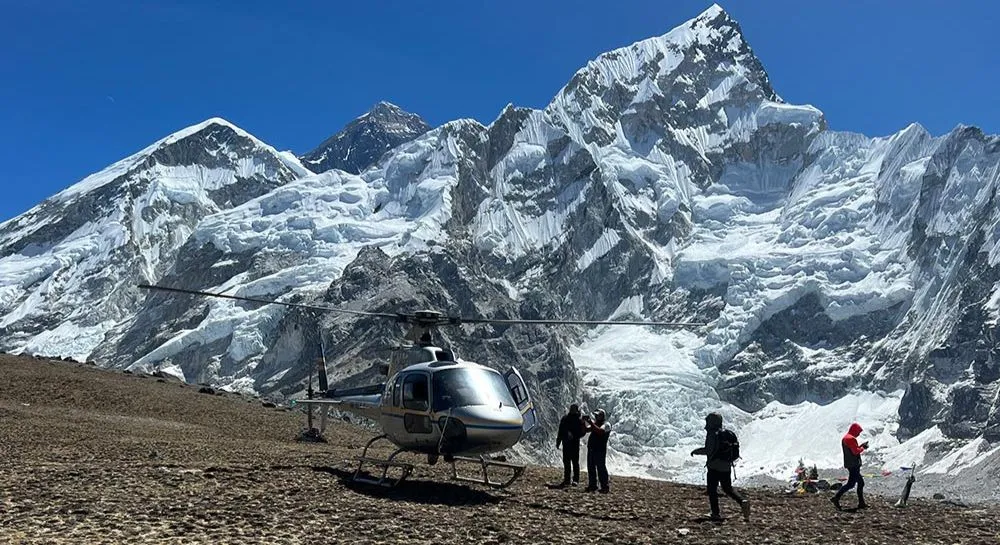
Another key safety factor is the presence of highly experienced pilots operating during peak season. These pilots are specially trained for Himalayan conditions and fly regularly during busy months, giving them up-to-date knowledge of weather patterns, landing zones, and terrain changes. Their expertise, combined with optimal seasonal conditions, ensures smooth operations and precise landings. Together, these factors make peak season the safest and most dependable time to enjoy an EBC Helicopter Tour.
Cost & Value During Peak Season
The peak season EBC Helicopter Tour usually comes with a slightly higher cost, mainly due to increased demand and optimal flying conditions. During spring and autumn, more travelers choose helicopter tours because of clear skies, stable weather, and reliable schedules. This high demand, combined with limited flight slots and strict safety regulations, naturally affects pricing. However, the higher cost reflects improved service quality, better flight reliability, and a significantly reduced risk of cancellations or rescheduling.
What truly sets peak season apart is the extra value it delivers. Travelers benefit from crystal-clear mountain views, smoother flights, safer landings, and more enjoyable ground time at Everest Base Camp or Kala Patthar. Added highlights such as a clear Everest-facing breakfast at Hotel Everest View, excellent photography conditions, and experienced pilots operating at full capacity all contribute to a premium experience. These elements are difficult to guarantee outside peak months, making peak season the most rewarding time for an Everest Base Camp Helicopter Tour.
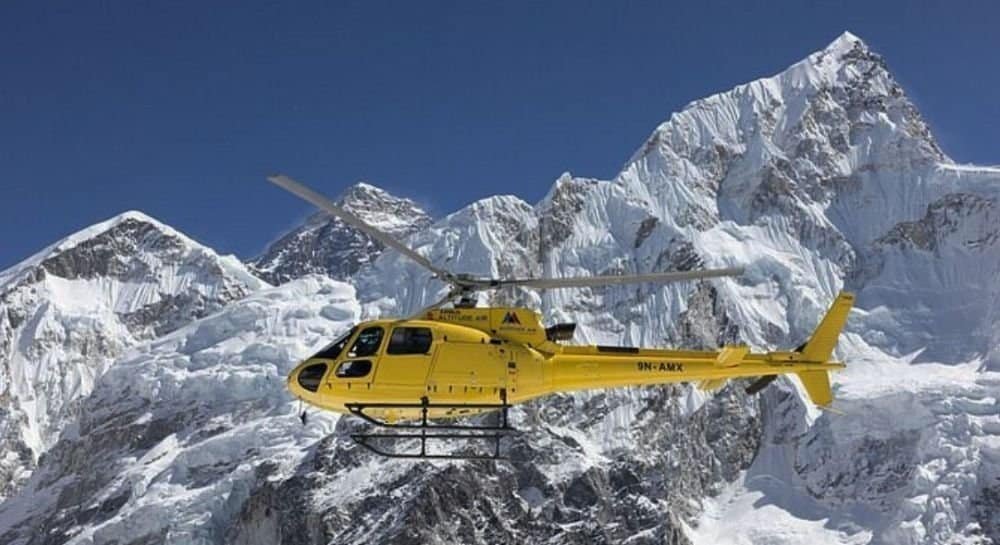
For time-limited travelers, peak season offers a far better return on investment (ROI). With fewer weather-related delays and higher flight success rates, travelers can confidently experience Everest in a single day without risking schedule disruptions. Instead of spending extra days waiting for clear weather, peak season ensures efficiency, comfort, and maximum visual impact in minimal time. This reliability and richness of experience make the peak season EBC Helicopter Tour the smartest choice for travelers seeking value, safety, and unforgettable Himalayan views.
Spring vs Autumn: Who Should Choose Peak Season?
The EBC Helicopter Tour is most popular during spring (March–May) and autumn (September–November) but each has its perks depending on the traveler’s choice. Springtime has white-topped mountains, colorful rhododendron forests, and rainbow valleys, all of them offering the blend of beautiful nature and magnificence of the Himalayas that travelers like. Autumn, on the other hand, is all about absolutely clear skies and super-high mountain viewing, allowing you to see the highest mountains, Everest, Lhotse, Nuptse, and Ama Dablam, sharper than ever, thus giving the best option for photographers and those who want to see panoramas of the Himalayas.
However, both spring and autumn provide stable flying conditions, each in their own distinct way. The temperature in spring is such that it is in the range of mild and quite comfortable for outdoor stops, while May may see the appearance of rare pre-monsoon clouds. The air in autumn is cool and dry with practically no haze, thus giving the clearest skies of the year. Wind remained a problem in both seasons, but autumn was a little better with the reliability of flights because of fewer weather surprises; it was a favorite of those travelers who wanted uninterrupted sightseeing during their EBC Helicopter Tour.
Choosing between spring and fall largely depends on your specific travel objectives. Autumn may be the time of the year for photographers and first-timers to see Everest, as it provides perfect conditions to view and stunningly outline the mountains. People who like nature and want to experience colorful landscapes might look forward to spring because of the rhododendron blossoms and a fresh snow. Besides, spring can be more advantageous for the traveler with flexible dates, whereas autumn is perfect for those who plan their trips around school holidays or specific peak-season availability. If the differences between seasons are understood, then the traveler can pick the best time for a luxury EBC Helicopter Tour that is customized according to preferences.
Who Should Choose a Peak Season EBC Helicopter Tour?
For the affluent traveler who finds scenic views enjoyable, the helicopter tours of the Everest Base Camp during the peak season are the most arduous journeys that lead to excitement through an experience of adventure. The peak seasons create a favorable atmosphere with plenty of blue sky days and slow-winding operations by helicopters. Therefore, these tours are the best way to appreciate the surroundings and experience this unique service. Whether guests choose a flight or a trek to high landing spots in unexpected places, the Everest View Hotel makes every effort to provide them with awe-inspiring perspectives that bring joy amidst the discomforts faced by those who must travel on foot.
It is also suitable for the novice traveler, as the peak season only ensures that a vision of an unequivocal mountain can be seen; stable weather conditions assisted us observers to witness a blessed Everest, Lhotse, Nuptse, and Ama Dablam without any fluctuations due to weather changes. Moreover, mountain viewing appears to be entirely unique during different seasons; it gives a better feeling to first-timers when the view stays. Like a memory that lasts, Nepal’s real beauty has been compelling in some respects and unfailing.
The elderly and families opt for the peak season because of its safety, convenience, and comfort. The calm weather and lower chance of turbulent winds at high altitudes make landing safer, and the temperature is delightfully cool for short outdoor breaks. Unlike trekking, which demands physical effort, a chopper tour provides easier access to the greatest viewings of Everest with no difficult walking, regardless of the traveler’s age.
Finally, time-limited travelers gain the most value during peak season. With higher flight reliability, fewer cancellations, and optimal mountain visibility, travelers can see Everest in just a day without compromising on the experience. Peak season provides the most efficient and rewarding EBC Helicopter Tour experience for business travelers, those on a short vacation, or anyone with a tight schedule.
Final Thoughts: Is Peak Season the Best Time for an EBC Helicopter Tour?
The peak season EBC Helicopter Tour is the most reliable, scenic, and memorable Himalayan experience for travelers. The weather is stable, the wind is low, and the sky is crystal-clear, so the passengers have the view of Mount Everest, Lhotse, Nuptse, and Ama Dablam. The peak season also provides safety for landings at high-altitude locations such as Kala Patthar and Everest Base Camp, more time for photography, and the extra comfort of stops at Hotel Everest View with its famous Everest-facing breakfast.
Spring and autumn each have their set of unique benefits, from blooming rhododendrons and fresh snow in spring to perfect visibility and sharp mountain outlines in autumn. For those who value efficiency, comfort, and breathtaking scenery, peak season is the only time to go for an Everest Base Camp Helicopter Tour. The combination of scenic highlights, safety, and operational reliability makes it an ideal choice for first-time visitors, luxury travelers, families, and anyone with limited time.
Selecting peak season enhances the worth and the impact of this once-in-a-lifetime adventure, making sure that every moment over the Himalayas is the most spectacular possible. Do you want to take the Everest Base Camp Helicopter Tour in peak season? Get in touch with us today to arrange your adventure and reserve your place. Our team is ready to respond to your queries, advise you on the best season, and make your Himalayan trip smooth, secure, and unforgettable.