Seeing Nepal from the Sky
Nepal is known worldwide for towering Himalayan peaks, rich valleys, serene lakes, and vibrant cultural villages. One of the most exceptional ways to view all this is from the air. A helicopter in Nepal serves a huge number of travelers who wish to witness and explore the greatness of nature, often in far-off locations, in a short amount of time. Unlike trekking or road travel, aerial tours provide uninterrupted views of Mount Everest, Annapurna, Machhapuchhre, and other iconic peaks, along with glaciers, alpine lakes, and deep valleys, all from a safe and comfortable perspective. This combination of convenience, speed, and panoramic beauty has made helicopter sightseeing one of the most sought-after ways to explore Nepal.
These tours are especially ideal for individuals with limited time or those seeking luxury holidays who prefer not to trek long distances through harsh Himalayan weather to access high-altitude areas. Travelers can look at the Himalayas without going through long hikes, stormy weather, or steep climbs. Villages and monasteries that are often difficult to reach by foot appear in sharp detail, while glaciers and snow-capped peaks reveal their true scale and majesty. By combining luxury, adventure, and unmatched scenery, Nepal helicopter tours provide a once-in-a-lifetime way to experience the country’s natural and cultural wonders, making every journey above the mountains an unforgettable adventure.
What differentiates helicopter tours from other tours is that they provide a very unique aerial view. The travelers see the Himalayas with their scale and magnificence, the very intricate patterns of terraced farmland, the sparkling of the alpine lakes, and the meandering rivers that erode through deep valleys from the top. The villages and monasteries, which are hard to reach on foot, appear in very sharp detail, while the glaciers and snow-covered mountain tops reveal their true size and greatness. By offering luxury, adventure, and the best of nature’s beauty, Nepal helicopter tours have opened up a great way to see the country’s unique natural and cultural heritage, of which the whole journey over the mountains is like an unforgettable adventure.
Everest Base Camp Helicopter Tour
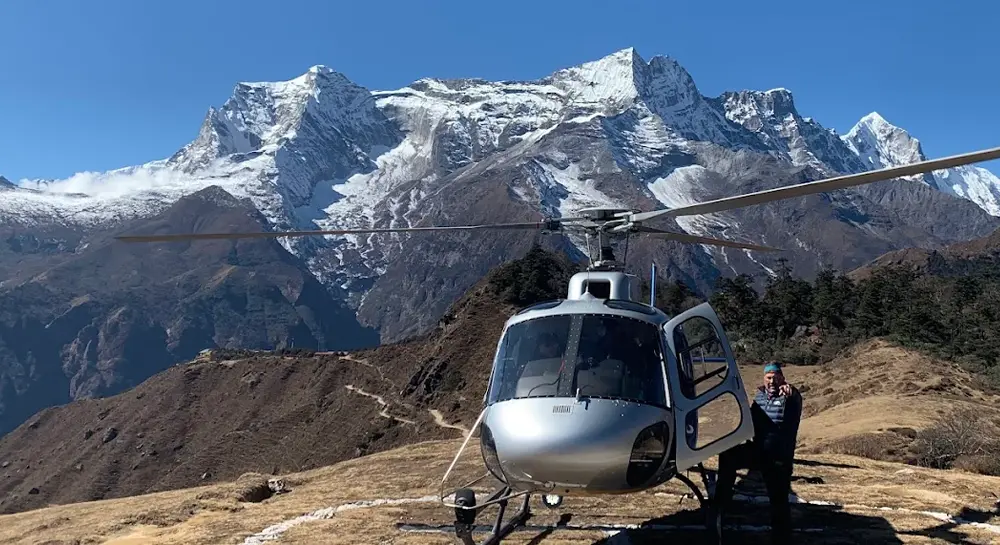
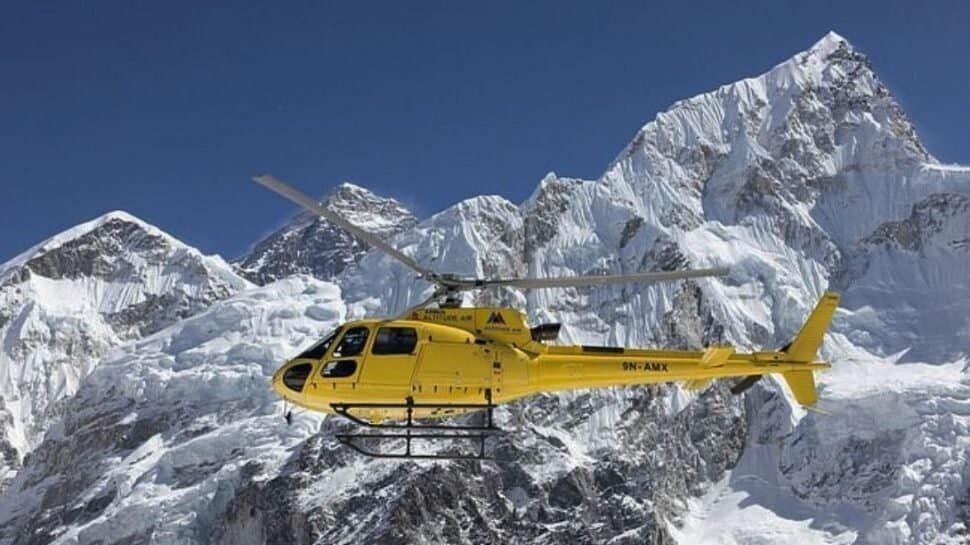
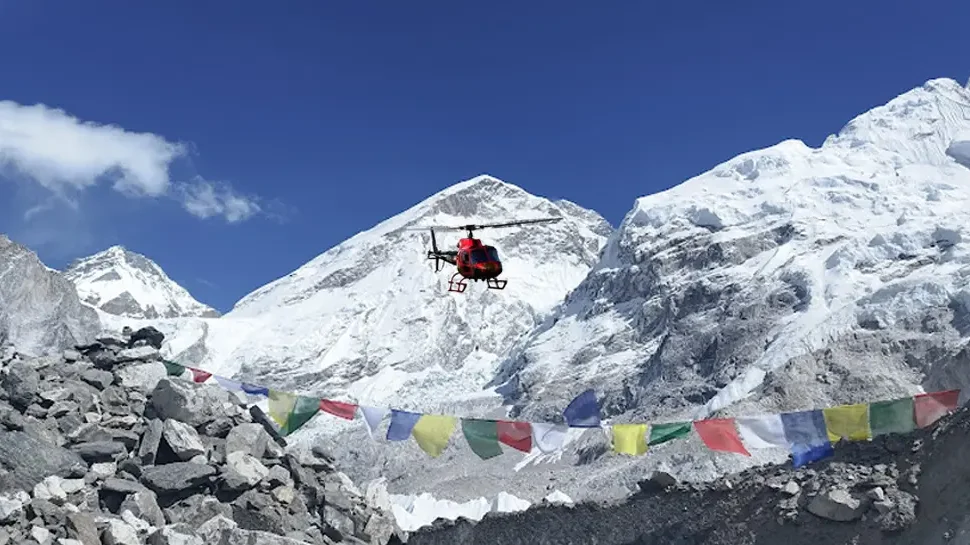
The Everest Base Camp Helicopter Tour is a stunning trip to the Himalayas, where visitors can see the famous Everest area in a short but very sufficient time. The trip starts in Kathmandu and slowly goes east, departing the busy city and revealing the beautiful rolling hills, rivers, and rice paddies below. This gradual transition from the lowland landscape to the rugged mountain area signals the beginning of an incredible aerial adventure toward the world’s highest peaks.
When the helicopter reaches the Khumbu region, the landscape is completely different. The view includes isolated mountain villages, winding valleys, and sometimes airstrips that are difficult to reach due to high altitude, showcasing the remoteness and charm of this popular hiking area. The helicopter follows a path along the ridges and through the valleys formed by nature in the mountains, eliminating the need to fly over the rocky ridges. The helicopter also flies through deep gorges, providing the riders with an up-close and intimate view of the Himalayan habitat, which is remarkably luxurious considering the limited number of people who can experience it.
The great white giants of the Himalayas surround you, the ice rivers are endless under the plane, and the size of the mountains is really incredible. The journey is smooth and secure, managed by skilled pilots specifically trained for high-altitude situations, allowing travelers to relax and take in all the incredible views while heading to the mythical Everest area.
Everest Helicopter Breakfast Tour (Hotel Everest View)
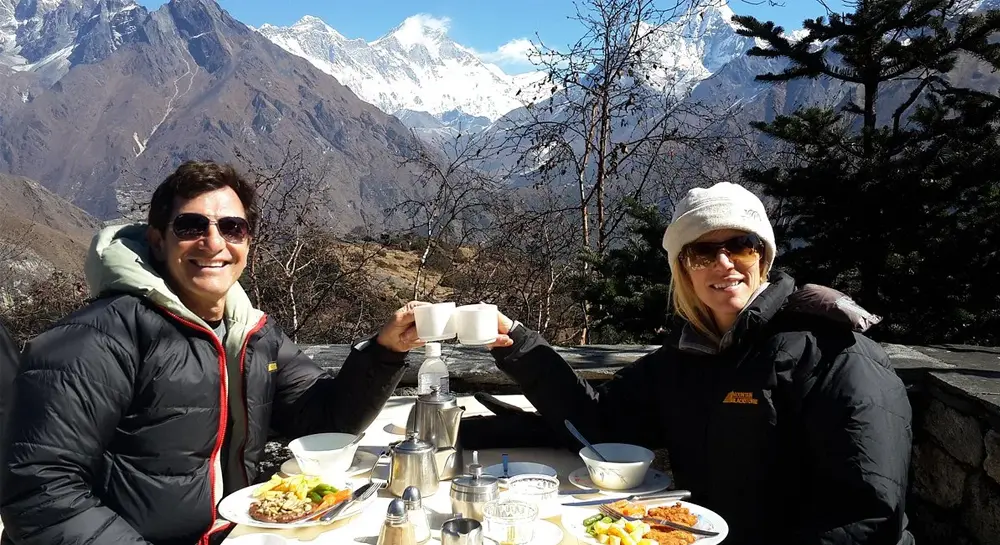
The tour (Hotel Everest View) is short but also a luxurious way to witness the grandeur of the Himalayas. It is perfectly suited for those who want to see Mount Everest but do not wish to undertake the whole Everest Base Camp helicopter ride. This top-of-the-line tour interweaves comfort, speed, and exhilarating landscapes, and thus it is an amazing morning flight over gently undulating hills, river valleys, and typical Sherpa settlements before finally reaching the lofty Himalayas.
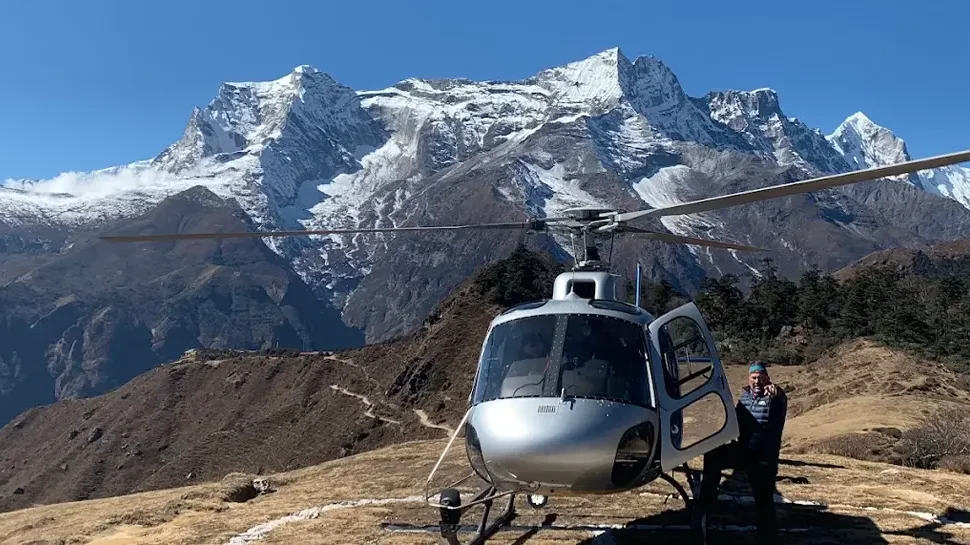
The tour’s highlight is the landing at Hotel Everest View (3,880 m), the world’s highest luxury hotel, where guests get the opportunity to have a fresh breakfast while being the center of the magnificent mountain views. Being on the terrace with hot food and drinks, pure Himalayan air, and unrestricted sights is a tranquil yet thrilling experience that unites adventure with luxury.
The difference between this tour and the full Everest Base Camp Helicopter Tour mainly lies in the length and emphasis. The full EBC tour, apart from extended flight time, includes flyovers of Everest Base Camp, the Khumbu Glacier, and sometimes even Kala Patthar, while the breakfast tour focuses on the scenic flying and a luxurious stop at Hotel Everest View. Lasting around 4 to 5 hours, it perfectly suits the luxury traveler, families, older visitors, honeymooners, and anyone visiting Nepal with little time. For those seeking the ultimate high-altitude adventure that combines comfort and privacy, the Everest Helicopter Breakfast Tour is an ideal choice.
Annapurna Base Camp Helicopter Tour
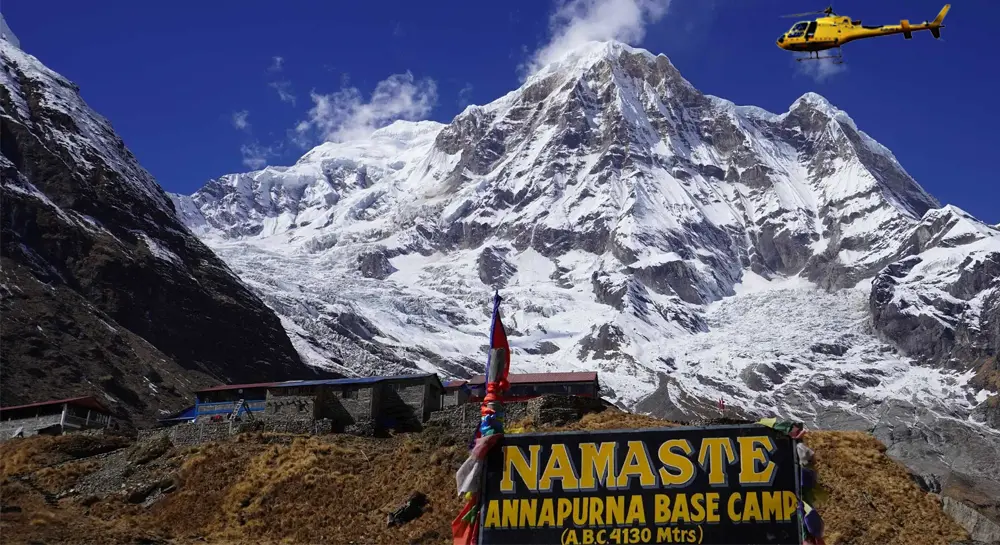
The Annapurna Base Camp Helicopter Tour is a real-life way to see the heart of the Annapurna region in a short and comfortable way, making it perfect for travelers wanting to see the grace of the Annapurna Himalayas without trekking for days. The flight usually launches from Pokhara, the gateway to the Annapurna region, although you may also take off from Kathmandu. From the air, passengers get to marvel at views of Phewa Lake, lush forests, and terraced hills that lead to traditional Gurung villages before falling into the Annapurna Sanctuary The steep cliffs, deep valleys, and snow-clad peaks are objectives worth the Himalayan visit.
One of the main attractions of this flight is a close-up view of Annapurna I (8,091 m/26,546 ft), the 10th highest mountain in the world. As the helicopter rises higher, one can see the Machhapuchhre (Fishtail) with its solitary twin-tip summit and the beautiful well-defined summits of the Dhaulagiri, Hiunchuli, and Annapurna South. In this flyover within the Annapurna Sanctuary, passengers are in for a visual treat, admiring the grandeur of the towering peaks and stern mountain terrain. Touching down at the Annapurna Base Camp (4,130 m) enables one to take photographs, go for brief walks, and absorb the serenity of the valley against the impressive snow-covered mountains, an unforgettable feeling of presence and awe.
The best seasons for this tour are undoubtedly spring (March to May) and autumn (September to November), connecting clear skies and magnificent mountains. Spring brings forth lower regions dominated by rhododendron flowers providing vibrant colors, whereas autumn displays brief but clear and panoramic views. An ideal option for trekking for those who wish to see the entire Annapurna Region from the air, also for trekking a long trek, and custom-made for adventure seekers and nature lovers. The adventures, luxury, and stunning view make this Annapurna Base Camp Helicopter Tour one of the most remarkable Himalayan experiences in Nepal.
Gokyo Lakes Helicopter Tour
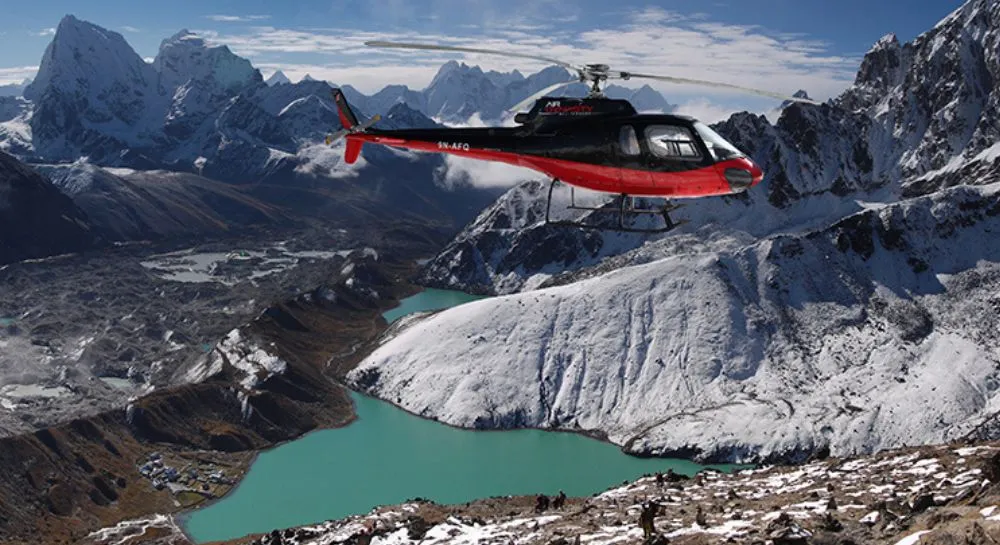
The Gokyo Lakes Helicopter Tour offers an extraordinary aerial perspective of one of the most remote and stunning regions of the Everest area. From the air, travelers can admire the turquoise Gokyo Lakes surrounded by snow-capped peaks, deep valleys, and small Sherpa villages, providing a serene contrast to the more frequented Everest Base Camp route. Flying over the Ngozumpa Glacier, the longest glacier in Nepal, reveals dramatic icefalls and frozen river-like formations, giving passengers a sense of the raw, rugged Himalayan terrain that is rarely seen from the ground.
A key highlight of the tour is the landing near designated viewpoints or along the lakes, allowing travelers to step out and capture breathtaking photographs. The Gokyo Lakes themselves reflect the surrounding mountains on clear days, creating a mirror-like effect that is ideal for photography. Combined with close-up views of Mount Everest, Cho Oyu, and other Himalayan giants, this tour provides a truly memorable and immersive high-altitude experience, where nature and tranquility dominate every moment.
The best time for the Gokyo Lakes Helicopter Tour is during autumn (September to November) and spring (March to May), when skies are clear and visibility is at its peak. This tour is perfect for travelers who prefer scenic beauty over long treks and want to explore a quieter part of the Everest region or are seeking exceptional photographic opportunities. Compared to the Everest Base Camp tour, the Gokyo experience emphasizes alpine lakes, glaciers, and remote peaks, offering a more serene, reflective, and visually striking alternative for families, nature lovers, and time-limited visitors.
Langtang Valley Helicopter Tour
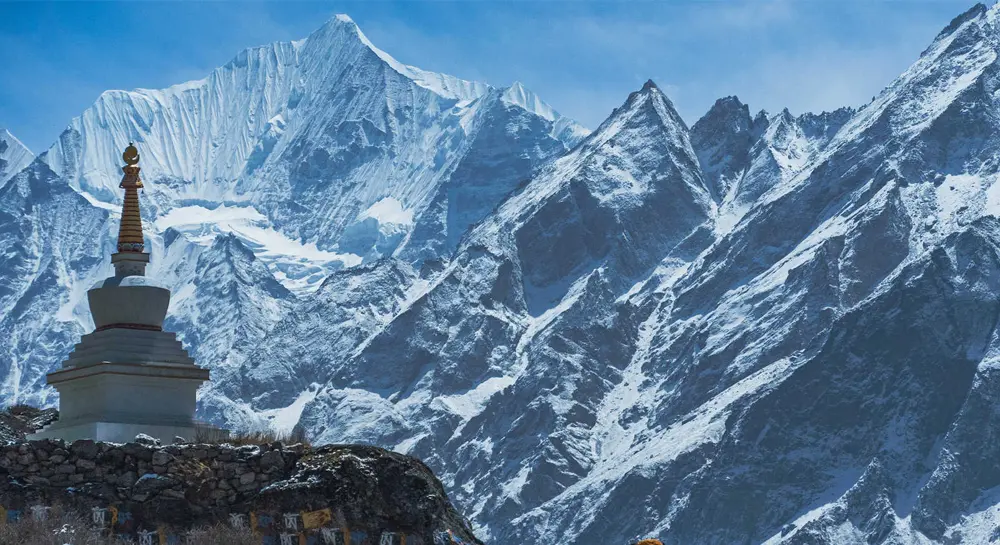
The Langtang Valley helicopter tour is one of the most wonderful and shortest airborne experiences that has allowed the travelers to explore the beauties of the Langtang Region without even moving far from Kathmandu. This helicopter ride is followed by picturesque scenery, including lush hills covered by layers of terraced farmland and forested valleys, lying idyllically in the high Himalayas. The Langtang Himal, glaciers, deep valleys, and remote villages can be seen uninterruptedly from the air, portraying an awesome view from this neglected part of Nepal.
In addition to reflecting the beauty of nature, one of the special attractions of this valley is its rich cultural and traditional values. Flying over Langtang Valley, visitors can catch a sight of Tibetan-style villages, monasteries, and settlements that portray the local heritage in snow-capped peaks and glacial streams; as such, the picturesque mountains and the live tradition of mountain culture within the Langtang Valley Helicopter Tour combine in an experiential occasion whereby the exteriors and the interiors of the travelers appear to meet in a twin matrimony.
The tour is ideal for those who wish to visit a quieter and relatively secluded Everest or Annapurnas. The tour targets families, honeymooners, photographers, and travelers who have little time in Nepal but yet seek adventure in the mountains with a minimum of effort. The tour is a perfect example of a luxurious experience that is culturally intact to give long-lasting impressions of the Himalayan landscapes of Nepal.
Best Time for Scenic Helicopter Tours in Nepal
The best times to take scenic helicopter tours of Nepal would definitely be in and around spring (March-May) and autumn (Sep-Nov), catered with clear blue skies and nil since it is rare to experience excessive rainfall, and visibility that will definitely allow one to appreciate the majesty of the Himalaya. Spring will buffet rhododendron blooms, creating an exciting color contrast in the grey-green lower-altitude landscapes, and autumn with crisp, clear air provides the perfect time and opportunity for sharp panoramas unobstructed by clouds, perfect for camera work.
Weather clarity and mountain visibility are paramount for a safe, pleasurable helicopter experience. Skies are generally clear with reduced cloud cover and less atmospheric haziness during peak seasons, making it easier to see some of the most iconic peaks, such as Everest, Annapurna, Machhapuchhre, and Dhaulagiri. Flights are usually scheduled early in the morning, as the wind remains very calm during such early hours and visibility remains optimal, ensuring uninterrupted panoramas of snow-capped peaks, glaciers, valleys, and high-altitude lakes for passengers to see.
During the off-season flights, that is, in June, July, and August, there may be some unpredictability on account of heavy rainfall, low clouds, and poor visibility, any of which may interfere with views of the mountains or may actually contradict the safety of the flight. The winter months, December to February, can bring about clear overhead on sunny days; nonetheless, the temperature is cold, and some high-altitude landing spots may be snowed in. Travelers thinking of helicopter flights during the off-peak seasons should be flexible and adjust schedules considering weather conditions that make for safe and enjoyable flying experiences.
Safety, Weather & Flight Considerations for Scenic Helicopter Tours in Nepal
All the scenic helicopter tours in Nepal prioritize the safety of their riders; moreover, the pilots they engage are acutely trained professionals who have been flying in highlanders like the Himalayas. The pilots’ skills and perseverance lie in the manner in which they can fly through mountain peaks and unforeseen weather changes and land on high-altitude obstacles. The helicopters flying here are well-equipped with contemporary technology, ensuring the highest level of safety.
Himalayan heli rides basically depend on the weather. This is so because everything can change very quickly at the higher elevations: visibility, wind, and precipitation. Travelers should be understanding based on their level of flexibility and patience, as safety features are the top priority, with clear weather being the most important factor that contributes to making the entire experience magical.
Consumers can opt for group-sharing or private charter flights when they make bookings. Group flights are the most prudent of the two, perfect for the solo, loner traveler or a small group, and provide an opportunity for not just one person but many to share jaw-dropping views, whereas charters of the private kind offer a different view of the clouds with desired comfort, personal itinerary, and private seating wherein families, couples, or solitary travelers wanting luxury and complete privacy can be entertained. Both options excel in prioritizing safety and ensuring that this safe environment provides ease and reassurance while enjoying Nepal’s fantastic vistas.
How to Choose the Right Helicopter Tour
- Determine how much time you have available, whether it’s a few hours or a full-day experience.
- Decide whether you prefer a short scenic flight or a longer tour with multiple landings.
- Consider the size of your group and whether a private charter or group-sharing flight is more suitable.
- Assess your budget and choose a tour that offers the experience you want while staying within your means.
- Identify the scenery you want to prioritize, such as towering mountains, alpine lakes, glaciers, or cultural villages.
- Check the season and weather conditions to ensure clear visibility and optimal views.
- Think about accessibility and comfort, especially if traveling with elderly family members or young children.
- Choose a tour that aligns with your desired level of adventure or luxury, whether it’s a quick, comfortable flight or a premium, fully catered experience.
For more details you can reach out to us by filling this form :- here
or you can reach out to us via this website too- Himalayanluxuryholiday
Conclusion: A Once-in-a-Lifetime Himalayan Experience
Helicopter tours in Nepal offer an unforgettable way to experience the Himalayas, combining breathtaking scenery, comfort, and accessibility. From soaring over towering peaks, glaciers, and alpine lakes to landing at iconic locations like Everest Base Camp or Hotel Everest View, these tours provide perspectives that trekking alone cannot achieve. Exploring Nepal from above allows travelers to fully appreciate the scale, beauty, and diversity of its landscapes, while also glimpsing its unique cultural villages and remote regions. For anyone seeking a memorable, time-efficient, and awe-inspiring adventure, helicopter tours are the perfect choice. Contact us today to book your scenic helicopter tour and secure an unparalleled Himalayan journey that will stay with you for a lifetime.